


By Felister Peter, IPPMedia
A scientific theory has linked the loss of snow on Mount Kilimanjaro to deforestation and dismissed suggestions that the dwindling of glaciers on Africa’s highest peak was due to global warming.
The theory is highlighted in a recent study report compiled by two researchers from Britain’s Portsmouth University, Nicholas Pepin and Martin Schaefer, who surveyed the mountain’s glaciers for 11 days. The researchers, who revealed their findings at a news conference in Dar es Salaam yesterday, said the mountain’s glacier surface had shrunk from 20 km in 1880 to a mere two kilometres in 2000.
They said the development was caused more by local than regional factors, with Pepin suggesting that deforestation mainly due to extensive farming as the major cause. “Deforestation of the mountain’s foothills is the most likely culprit because without forests there is too much evaporation of humidity into outer space. The result is that moisture-laden winds blowing across those forests have become drier and drier,” he explained.
“Loss of humidity automatically leads to a reduction in cloud cover. Clouds play a crucial role in protecting ice from sunrays, with fewer sunrays meaning faster freezing of water,: he added, citing reduced precipitation as another reason for the receding ice cover on the mountain’s summit.
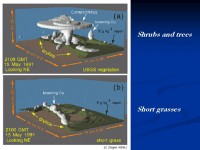
See larger image here
Last year, another study on the dwindling ice cover on the mountain`s cap suggested that global warming had nothing to do with the alarming loss of its beautiful snows. The scientists who conducted the study, US-based Philip Mote and Georg Kaser, assertively linked the problem to a process known as sublimation. Revealing the findings they first published last year in the American Scientist magazine, the experts cautioned that using Mount Kilimanjaro as a “poster child” for climate change was awfully inaccurate.
In remarks at yesterday`s news conference, Journalists Environmental Association of Tanzania chairman Deo Mfugale also linked the loss of glaciers on Mount Kilimanjaro to human activities rather than global warming. He called for an end to the random felling trees and burning forests, mainly done for charcoal and timber, saying these and related practices led to the destruction of some 15 per cent of forests in Tanzania between 1976 and last year. Read more here.