

Paul Driessen
Prelude: see this video from Princeton’s William Happer
The social costs of carbon cancelation
Banning carbon-based fuels will impose enormous costs that Team Biden deliberately ignores
Paul Driessen
Fearing that incessant warnings about man-made climate cataclysms would not be enough to end US fossil fuel use, the Obama-Biden Administration instructed a special Interagency Working Group to concoct a “social cost of carbon” concept. The SCC would “scientifically” calibrate the dollar value of damages that a ton of carbon dioxide emitted today in America would inflict on the USA and world in the future.
The price tag was set at $22/ton in 2010, raised to $36/ton in 2013, and just as arbitrarily increased to $40, before finishing the Obama era at $51/ton. President Trump disbanded the IWG and had the SCC slashed to less than $10/ton. Within hours of taking office, President Biden resurrected the working group, reinstituted $51/ton as a starting point, and directed federal agencies to devise a definitive SCC by 2022.
This “updated” version will reflect “recent developments in the science and economics” of climate change, including the costs of other greenhouse gases, the White House said. It will also factor in US commitments under the Paris climate treaty, and especially “considerations of environmental justice and intergenerational equity.” Climate “scientists,” economists, “ethics experts” and “diverse stakeholders” will all participate in the process, which many expect will devise a final SCC of $100 or even $200/ton.
The IWG methodology for developing SCC estimates is so infinitely flexible, so devoid of any rigorous standards, that it could produce almost any estimates that Biden and his climate czars feel is needed. Adding “justice” and “equity” to the mix makes it doubly malleable, doubly prone to abuse by an administration and Democrat Party that are obsessed with “manmade climate change” (even Securities and Exchange Commission and Department of Defense appointees must be committed to ending the “climate crisis") and are determined to make America “carbon neutral” by 2050.
Social cost of carbon is intended to advance that agenda and a 981-page “CLEAN Future” bill requiring that electricity generators provide 80% carbon-free energy by 2030 and 100% “clean” power by 2035.
Right now, over 80% of all US and global energy come from fossil fuels - and China, India and other countries are building thousands of new coal-fired power plants, on top of the thousands they already have. So even total cancelation of fossil fuel use and CO2/greenhouse gas emissions by the United States would be imperceptible and irrelevant amid the world’s enormous and increasing levels of both.
Social cost of carbon is a key tactic in a war on reliable, affordable American energy; on jobs, human welfare and human rights; and on US and global lands, wildlife and environmental quality. It will be used to justify raising carbon taxes and prices to at least $160 per ton of CO2 and imposing Covid-on-steroids lockdowns every two years, supposedly to keep average global temperatures from rising more than 1.5 degrees C from pre-industrial/post Little Ice Age levels, which alarmists claim would be catastrophic.
The SCC enables agencies and their allies to attach any price they wish to every conceivable cost of using fossil fuels: hotter and colder, wetter and drier climate and weather; more frequent and intense hurricanes; reduced agricultural output; forest health and wildfires; floods, droughts and water resources; “forced migration” of people and wildlife; worsening health and disease; flooded coastal cities; even “reduced student learning and worker productivity,” due to warmer planetary temperatures.
The SCC also lets practitioners completely ignore the obvious and enormous benefits of using fossil fuels, and emitting carbon dioxide - such as enhanced productivity via affordable air conditioning in summer and heating in winter; improved forest, grassland and crop growth (and greening deserts) due to more CO2 in the air; greater home and human survival rates amid extreme weather events; and having the jobs, mobility, living standards, healthcare and longevity of modern industrialized life.
In fact, hydrocarbon and carbon dioxide benefits outweigh costs by 50:1, 400:1 or even 500:1! Will Team Biden and others in the anti-hydrocarbon movement acknowledge any of this?
Unless compelled to do so by our courts, the odds are probably 500:1 against it. They won’t even admit that the sun and other natural forces still play dominant roles in climate and weather, as they have throughout history. In their minds, every SCC cost is directly and solely due to fossil fuels. (For a reality check, read Indur Goklany, Patrick Moore, Gregory Wrightstone, Marc Morano and Jennifer Marohasy.)
In fact, eliminating carbon-based energy and carbon dioxide emissions will impose far greater human and ecological costs. It is fossil fuel replacements that will inflict incalculable damage to people and planet.
Replacing coal, oil, natural gas and internal combustion vehicles would require millions of wind turbines, billions of solar panels, billions of battery modules, millions of acres of biofuel plantations, a complete overhaul of electrical grids and infrastructures, on millions of acres. That will require billions of tons of steel, aluminum, copper, lithium, cobalt, rare earth elements, concrete, plastics and other materials - which will require digging up and processing hundreds of billions of tons of ores and minerals.
Under Team Biden, Democrats and Big Green, little of this will take place in the US, under our rigorous laws and regulations. It will be done overseas, in China, Mongolia, Africa, Bolivia - often with slave and child labor, and with few or no workplace safety, air and water pollution, toxic substances, endangered species or other rules. Don’t their health, human rights and environmental quality mean anything?
The technologies may be clean and emission-free in the USA - but won’t be in any of these countries.
Even manufacturing the turbines, panels, batteries and other technologies will be done overseas - again with few or no pollution, health, safety or fair wage rules - because expensive, unreliable, weather-dependent, blackout-prone electricity will send America’s manufacturing and other basic industries into oblivion, along with millions of good jobs. Minority and blue-collar families will be hammered hardest.
The proliferation of “clean, climate-friendly” wind and solar energy will pummel wildlife and habitats. Wind turbines already slaughter a million birds and bats annually in the USA - far in excess of what Big Wind admits to - and that’s from a “measly” 60,000 turbines. The same thing is happening in Europe.
With the best wind sites being along migratory bird flyways, raptor hunting grounds, bat habitats, and Great Lake and sea coasts, the slaughter will get worse with every passing year. I just put new bluebird, hummingbird and wood duck nest houses around my home and neighborhood. It is terribly depressing that such efforts in suburban areas will be overwhelmed by a tsunami of death in our wildlife kingdoms. As forests, grasslands and deserts get torn up for turbines and blanketed by solar panels and biofuel crops, mammals, reptiles, amphibians, invertebrates and wild plants will also disappear.
Team Biden, Democrats, Big Green and Big Media will loudly deny these realities. They will insist that any wildlife losses are “inadvertent.” As though the wildlife are less dead because it was inadvertent; as though negligible inadvertent deaths from fossil fuel extraction and pipelines were bad, but these are OK.
Wind turbines, solar panels and batteries have short life spans - and are difficult or impossible to recycle. Where will we bury millions of 300-foot-long fiberglass-composite turbine blades? billions of solar panels? Will we just keep sending solar panels overseas, where parents and children burn them in open fires to recover the metals- breathing toxic fumes all day long?
This is just the tip of the iceberg of adverse impacts from SCC/Green New Deal policies. Any honest, accurate, complete social cost of carbon analysis would require that every one of them be fully accounted for, before we make any decisions on fossil fuels. Will oddsmakers even take bets on that happening?
Will courts step up to the plate? Will state attorneys general? Will Republicans become better informed about our energy lifeblood, better organized, less focused on less critical issues - and more willing to mount passionate, principled opposition to this irresponsible insanity?
Or will Democrats just ram this through, because they can, because they control the House, Senate, White House and Deep State Executive Branch - perhaps with bare 1-10 majorities, but arrogant totalitarian control nonetheless?
Paul Driessen is senior policy advisor for the Committee For A Constructive Tomorrow (www.CFACT.org)
Author : Walter E. Williams
Note: Walter Williams passed on December 1, 2020 (see).
Parents, legislators, taxpayers, and others footing the bill for college education might be interested in just what is in store for the upcoming academic year.
Since many college classes will be online, there is a chance to witness professors indoctrinating their students in real time. So, there’s a chance that some college faculty might change their behavior. To see recent examples of campus nonsense and indoctrination, visit the Campus Reform and College Fix websites.
Jonathan Turley, a law professor at George Washington University, warned congressional lawmakers “that Antifa is ‘winning’ and that much of academia, whether wittingly or unwittingly, is complicit in its success,” reported Campus Reform.
In his testimony before Congress Turley said:
To Antifa, people like me are the personification of the classical liberal view of free speech that perpetuates a system of oppression and abuse. I wish I could say that my view remains strongly implanted in our higher educational institutions. However, you are more likely to find public supporters for restricting free speech than you are to find defenders of free speech principles on many campuses.
The leftist bias at our colleges and universities has many harmful effects. A mathematics professor at University of California, Davis, faced considerable backlash over her opposition to the requirement for “diversity statements” from potential faculty.
Those seeking employment at the University of California, San Diego, are required to admit that “barriers” prevent women and minorities from full participation in campus life.
At American University, a history professor wrote a book calling for the repeal of the Second Amendment. A Rutgers University professor said: “Watching the Iowa Caucus is a sickening display of the overrepresentation of whiteness.”
A Williams College professor has advocated the inclusion of social justice in math textbooks. Students at Wayne State University are no longer required to take a single math course to graduate; however, they may soon be required to take a diversity course.
Maybe some students will be forced into sharing the vision of Laurie Rubel, a math education professor at Brooklyn College. She says
the idea of cultural neutrality in math is a “myth,” and that asking whether 2 plus 2 equals 4 “reeks of white supremacist patriarchy.”
Rubel tweeted: “Y’all must know that the idea that math is objective or neutral IS A MYTH.”
Math professors and academics at other universities, including Harvard and the University of Illinois, discussed the “Eurocentric” roots of American mathematics. As for me, I would like to see the proof, in any culture, that 2 plus 2 is something other than 4.
Rutgers University’s English department chairwoman, Rebecca Walkowitz, announced changes to the department’s graduate writing program emphasizing “social justice” and “critical grammar.”
Leonydus Johnson, a speech-language pathologist and libertarian activist, says Walkowitz’s changes make the assumption that minorities cannot understand traditional and grammatically correct English speech and writing, which is “insulting, patronizing, and in itself, extremely racist.”
Then there is the nonsense taught on college campuses about white privilege. The idea of white privilege doesn’t explain why several historically marginalized groups outperform whites today.
For example, Japanese Americans suffered under the Alien Land Law of 1913 and other racist, exclusionary laws legally preventing them from owning land and property in more than a dozen American states until the Immigration and Nationality Act of 1952.
During World War II, more than 120,000 Japanese Americans were interned. However, by 1959, the income disparity between Japanese Americans and white Americans had almost disappeared.
Today, Japanese Americans outperform white Americans by large margins in income statistics, education outcomes, and test scores, and have much lower incarceration rates.
According to Rav Arora, writing for the New York Post, several black immigrant groups such as Nigerians, Trinidadians, Tobagonians, Barbadians, and Ghanaians all “have a median household income well above the American average.”
We are left with the question whether the people handing out “white privilege” made a mistake. The other alternative is that Japanese Americans, Nigerians, Barbadians, Ghanaians, Trinidadians, and Tobagonians are really white Americans.
The bottom line is that more Americans need to pay attention to the miseducation of our youth and that miseducation is not limited to higher education.
James Visentine
"After our daughter of fifteen years of age was moved to tears by the speech of Greta Thunberg at the UN recently, she became angry with our generation “who had been doing nothing for thirty years”. So, we decided to help her prevent what the girl on TV announced of “massive eradication and the disappearance of entire ecosystems”. We are now committed to give our daughter a future again, by doing our part to help cool the planet four degrees.
From now on she will go to school on a bicycle, because driving her by car costs fuel, and fuel puts emissions into the atmosphere. Of course it will be winter soon and then she will want to go by bus, but only as long as it is a diesel bus. Somehow, that does not seem to be conducive to ‘helping the Climate’.
Of course, she is now asking for an electric bicycle, but we have shown her the devastation caused to the areas of the planet as a result of mining for the extraction of Lithium and other minerals used to make batteries for electric bicycles, so she will be pedaling, or walking. Which will not harm her, or the planet. We used to cycle and walk to school too.
Since the girl on TV demanded “we need to get rid of our dependency on fossil fuels” and our daughter agreed with her, we have disconnected the heat vent in her room. The temperature is now dropping to twelve degrees in the evening, and will drop below freezing in the winter, we have promised to buy her an extra sweater, hat, tights, gloves and a blanket.
For the same reason we have decided that from now on she only takes a cold shower. She will wash her clothes by hand, with a wooden washboard, because the washing machine is simply a power consumer and since the dryer uses natural gas, she will hang her clothes on the clothesline to dry.
Speaking of clothes, the ones that she currently has are all synthetic, so made from petroleum. Therefore on Monday, we will bring all her designer clothing to the secondhand shop.
We have found an eco store where the only clothing they sell is made from undyed and unbleached linen, wool and jute. It shouldn’t matter that it looks good on her, or that she is going to be laughed at, dressing in colorless, bland clothes and without a wireless bra, but that is the price she has to pay for the benefit of The Climate. Cotton is out of the question, as it comes from distant lands and pesticides are used for it. Very bad for the environment.
We just saw on her Instagram that she’s pretty angry with us. This was not our intention.
From now on, at 7 p.m. we will turn off the Wi-Fi and we will only switch it on again the next day after dinner for two hours. In this way we will save on electricity, so she is not bothered by electro-stress and will be totally isolated from the outside world. This way, she can concentrate solely on her homework. At eleven o’clock in the evening we will pull the breaker to shut the power off to her room, so she knows that dark is really dark. That will save a lot of CO2.
She will no longer be participating in winter sports to ski lodges and resorts, nor will she be going on any more vacations with us, because our vacation destinations are practically inaccessible by bicycle.
Since our daughter fully agrees with the girl on TV that the CO2 emissions and footprints of her great-grandparents are to blame for ‘killing our planet’, what all this simply means, is that she also has to live like her great-grandparents and they never had a holiday, a car or even a bicycle.
We haven’t talked about the carbon footprint of food yet. Zero CO2 footprint means no meat, no fish and no poultry, but also no meat substitutes that are based on soy (after all, that grows in farmers fields, that use machinery to harvest the beans, trucks to transport to the processing plants, where more energy is used, then trucked to the packaging/canning plants, and trucked once again to the stores) and also no imported food, because that has a negative ecological effect. And absolutely no chocolate from Africa, no coffee from South America and no tea from Asia.
Only homegrown potatoes, vegetables and fruit that have been grown in local cold soil, because greenhouses run on boilers, piped in CO2 and artificial light. Apparently, these things are also bad for The Climate. We will teach her how to grow her own food.
Bread is still possible, but butter, milk, cheese and yogurt, cottage cheese and cream come from cows and they emit CO2. No more margarine and no oils will be used for the frying pan, because that fat is palm oil from plantations in Borneo where rain forests first grew.
No ice cream in the summer. No soft drinks and no energy drinks, as the bubbles are CO2. She wanted to lose some pounds, well; this will help her achieve that goal too.
We will also ban all plastic, because it comes from chemical factories. Everything made of steel and aluminum must also be removed. Have you ever seen the amount of energy a blast furnace consumes or an aluminum smelter? Uber bad for the climate!
We will replace her 9600 coil, memory foam pillow top mattress, with a jute bag filled with straw, with a horsehair pillow.
And finally, she will no longer be using makeup, soap, shampoo, cream, lotion, conditioner, toothpaste and medication. Her sanitary napkins will be replaced with pads made of linen, that she can wash by hand, with her wooden washboard, just like her female ancestors did before climate change made her angry at us for destroying her future.
In this way we will help her to do her part to prevent mass extinction, water levels rising and the disappearance of entire ecosystems. If she truly believes she wants to walk the talk of the girl on TV, she will gladly accept and happily embrace her “new way of life.
May your troubles be less, may your blessings be more, and may nothing but happiness come through your door! When we choose not to focus on what is missing from our lives but are grateful for the abundance that is present we experience heaven on earth.
Paul Driessen
For years we’ve been subjected to what can only be described as fake science on climate change, brought to us by folks that can best be described as fake climate scientists.
They engage in practices that real scientists would never follow, and willfully ignore everything the scientific method prescribes as guidelines for honest, replicable, beneficial research. Even worse, these fake/alarmist scientists demand that their suspect work be used to justify energy policies that would upend and devastate modern industrial economies - for no climate benefit… with millions of acres blanketed by wind turbines and solar panels ...and with billions of impoverished people being trapped in energy poverty, disease, malnutrition and early death.
My article this week tackles this problem head-on. Thank you for posting it, quoting from it, and forwarding it to your friends and colleagues.
Best regards,
Paul
Fake climate science and scientists
Alarmists game the system to enrich and empower themselves, and hurt everyone else
Paul Driessen
The multi-colored placard in front of a $2-million home in North Center Chicago proudly proclaimed, “In this house we believe: No human is illegal” - and “Science is real” (plus a few other liberal mantras).
I knew right away where the owners stood on climate change, and other hot-button political issues. They would likely tolerate no dissension or debate on “settled” climate science or any of the other topics.
But they have it exactly backward on the science issue. Real science is not belief - or consensus, 97% or otherwise. Real science constantly asks questions, expresses skepticism, reexamines hypotheses and evidence. If debate, skepticism and empirical evidence are prohibited - it’s pseudo-science, at best.
Real science - and real scientists - seek to understand natural phenomena and processes. They pose hypotheses that they think best explain what they have witnessed, then test them against actual evidence, observations and experimental data. If the hypotheses (and predictions based on them) are borne out by their subsequent findings, the hypotheses become theories, rules, laws of nature - at least until someone finds new evidence that pokes holes in their assessments, or devises better explanations.
Real science does not involve simply declaring that you “believe” something, It’s not immutable doctrine. It doesn’t claim “science is real” - or demand that a particular scientific explanation be carved in stone. Earth-centric concepts gave way to a sun-centered solar system. Miasma disease beliefs surrendered to the germ theory. The certainty that continents are locked in place was replaced by plate tectonics (and the realization that you can’t stop continental drift, any more than you stop climate change).
Real scientists often employ computers to analyze data more quickly and accurately, depict or model complex natural systems, or forecast future events or conditions. But they test their models against real-world evidence. If the models, observations and predictions don’t match up, real scientists modify or discard the models, and the hypotheses behind them. They engage in robust discussion and debate.
They don’t let models or hypotheses become substitutes for real-world evidence and observations. They don’t alter or “homogenize” raw or historic data to make it look like the models actually work. They don’t hide their data and computer algorithms (AlGoreRythms?), restrict peer review to closed circles of like-minded colleagues who protect one another’s reputations and funding, claim “the debate is over,” or try to silence anyone who dares to ask inconvenient questions or find fault with their claims and models. They don’t concoct hockey stick temperature graphs that can be replicated by plugging in random numbers.
In the realm contemplated by the Chicago yard sign, we ought to be doing all we can to understand Earth’s highly complex, largely chaotic, frequently changing climate system - all we can to figure out how the sun and other powerful forces interact with each other. Only in that way can we accurately predict future climate changes, prepare for them, and not waste money and resources chasing goblins.
But instead, we have people in white lab coats masquerading as real scientists. They’re doing what I just explained true scientists don’t do. They also ignore fluctuations in solar energy output and numerous other powerful, interconnected natural forces that have driven climate change throughout Earth’s history. They look only (or 97% of the time) at carbon dioxide as the principle or sole driving force behind current and future climate changes - and blame every weather event, fire and walrus death on manmade CO2.
Even worse, they let their biases drive their research and use their pseudo-science to justify demands that we eliminate all fossil fuel use, and all carbon dioxide and methane emissions, by little more than a decade from now. Otherwise, they claim, we will bring unprecedented cataclysms to people and planet.
Not surprisingly, their bad behavior is applauded, funded and employed by politicians, environmentalists, journalists, celebrities, corporate executives, billionaires and others who have their own axes to grind, their own egos to inflate - and their intense desire to profit from climate alarmism and pseudo-science.
Worst of all, while they get rich and famous, their immoral actions impoverish billions and kill millions, by depriving them of the affordable, reliable fossil fuel energy that powers modern societies.
And still these slippery characters endlessly repeat the tired trope that they “believe in science” - and anyone who doesn’t agree to “keep fossil fuels in the ground” to stop climate change is a “science denier.”
When these folks and the yard sign crowd brandish the term “science,” political analyst Robert Tracinski suggests, it is primarily to “provide a badge of tribal identity” - while ironically demonstrating that they have no real understanding of or interest in “the guiding principles of actual science.”
Genuine climate scientist (and former chair of the School of Earth and Atmospheric Sciences at the Georgia Institute of Technology) Dr. Judith Curry echoes Tracinski. Politicians like Senator Elizabeth Warren use “science” as a way of “declaring belief in a proposition which is outside their knowledge and which they do not understand… The purpose of the trope is to bypass any meaningful discussion of these separate questions, rolling them all into one package deal - and one political party ticket,” she explains.
The ultimate purpose of all this, of course, is to silence the dissenting voices of evidence- and reality-based climate science, block creation of a Presidential Committee on Climate Science, and ensure that the only debate is over which actions to take first to end fossil fuel use ...and upend modern economies.
The last thing fake/alarmist climate scientists want is a full-throated debate with real climate scientists - a debate that forces them to defend their doomsday assertions, methodologies, data manipulation ... and claims that solar and other powerful natural forces are minuscule or irrelevant compared to manmade carbon dioxide that constitutes less that 0.02% of Earth’s atmosphere (natural CO2 adds another 0.02%).
Thankfully, there are many reasons for hope. For recognizing that we do not face a climate crisis, much less threats to our very existence. For realizing there is no need to subject ourselves to punitive carbon taxes or the misery, poverty, deprivation, disease and death that banning fossil fuels would cause.
Between the peak of the great global cooling scare in 1975 until around 1998, atmospheric carbon dioxide levels and temperatures did rise in rough conjunction. But then temperatures mostly flat-lined, while CO2 levels kept climbing. Now actual average global temperatures are already 1 degree F below the Garbage In-Garbage Out computer model predictions. Other alarmist forecasts are also out of touch with reality.
Instead of fearing rising CO2, we should thank it for making crop, forest and grassland plants grow faster and better, benefitting nature and humanity - especially in conjunction with slightly warmer temperatures that extend growing seasons, expand arable land and increase crop production.
The rate of sea level rise has not changed for over a century - and much of what alarmists attribute to climate change and rising seas is actually due to land subsidence and other factors.
Weather is not becoming more extreme. In fact, Harvey was the first Category 3-5 hurricane to make US landfall in a record 12 years - and the number of violent F3 to F5 tornadoes has fallen from an average of 56 per year from 1950 to 1985 to only 34 per year since then.
Human ingenuity and adaptability have enabled humans to survive and thrive in all sorts of climates, even during our far more primitive past. Allowed to use our brains, fossil fuels and technologies, we will deal just fine with whatever climate changes might confront us in the future. (Of course, another nature-driven Pleistocene-style glacier pulling 400 feet of water out of our oceans and crushing Northern Hemisphere forests and cities under mile-high walls of ice truly would be an existential threat to life as we know it.)
So if NYC Mayor Bill De Blasio and other egotistical grand-standing politicians and fake climate scientists want to ban fossil fuels, glass-and-steel buildings, cows and even hotdogs - in the name of preventing “dangerous manmade climate change” - let them impose their schemes on themselves and their own families. The rest of us are tired of being made guinea pigs in their fake-science experiments.
Paul Driessen is senior policy advisor for the Committee For A Constructive Tomorrow (CFACT) and author of articles and books on energy, environmental and human rights issues.
IBD
Global Warming: The National Oceanic and Atmospheric Administration may have a boring name, but it has a very important job: It measures U.S. temperatures. Unfortunately, it seems to be a captive of the global warming religion. Its data are fraudulent.
What do we mean by fraudulent? How about this: NOAA has made repeated “adjustments” to its data, for the presumed scientific reason of making the data sets more accurate.
Nothing wrong with that. Except, all their changes point to one thing - lowering previously measured temperatures to show cooler weather in the past, and raising more recent temperatures to show warming in the recent present.
This creates a data illusion of ever-rising temperatures to match the increase in CO2 in the Earth’s atmosphere since the mid-1800s, which global warming advocates say is a cause-and-effect relationship. The more CO2, the more warming.
But the actual measured temperature record shows something different: There have been hot years and hot decades since the turn of the last century, and colder years and colder decades. But the overall measured temperature shows no clear trend over the last century, at least not one that suggests runaway warming.
That is, until the NOAA’s statisticians “adjust” the data. Using complex statistical models, they change the data to reflect not reality, but their underlying theories of global warming. That’s clear from a simple fact of statistics: Data generate random errors, which cancel out over time. So by averaging data, the errors mostly disappear.
That’s not what NOAA does.
According to the NOAA, the errors aren’t random. They’re systematic. As we noted, all of their temperature adjustments lean cooler in the distant past, and warmer in the more recent past. But they’re very fuzzy about why this should be.
Far from legitimately “adjusting” anything, it appears they are cooking the data to show a politically correct trend toward global warming. Not by coincidence, that has been part and parcel of the government’s underlying policies for the better part of two decades.
What NOAA does aren’t niggling little changes, either.
As Tony Heller at the Real Climate Science web site notes, “Pre-2000 temperatures are progressively cooled, and post-2000 temperatures are warmed. This year has been a particularly spectacular episode of data tampering by NOAA, as they introduce nearly 2.5 degrees of fake warming since 1895.”
So the global warming scare is basically a hoax.
This winter, for instance, as measured by temperature in city after city and by snow-storm severity, has been one of the coldest on record in the Northeast.
But after the NOAA’s wizards finished with the data, it was merely about average.
Climate analyst Paul Homewood notes for instance that in New York state, measured temperatures this year were 2.7 degrees or more colder than in 1943. Not to NOAA. Its data show temperatures this year as 0.9 degrees cooler than the actual data in 1943.
Erasing Winter
By the way, a similar result occurred after the brutally cold 2013-2014 winter in New York. It was simply adjusted away. Do this year after year, and with the goal of radically altering the temperature record to fit the global warming narrative, and you have what amounts to climate fraud.
“Clearly NOAA’s highly homogenized and adjusted version of the Central Lakes temperature record bears no resemblance at all the the actual station data,” writes Homewood. ‘And if this one division is so badly in error, what confidence can there be that the rest of the U.S. is any better?”
That’s the big question. And for those who think that government officials don’t have political, cultural or other agendas, that’s naivete of the highest sort. They do.
Since the official government mantra for all of the bureaucracies at least since the Clinton era is that CO2 production is an evil that inevitably leads to runaway global warming, those who toil in the bureaucracies’ statistical sweat shops know that their careers and future funding depend on having the politically correct answers - not the scientifically correct ones.
“The key point here is that while NOAA frequently makes these adjustments to the raw data, it has never offered a convincing explanation as to why they are necessary,” wrote James Delingpole recently in Breitbart’s Big Government. “Nor yet, how exactly their adjusted data provides a more accurate version of the truth than the original data.”
There are at least some signs of progress, however. In the case of the Environmental Protection Agency, future reports and studies will include the data and the underlying scientific assumptions for public scrutiny.
That’s one way to bring greater honesty to government - and to keep climate charlatans from bankrupting our nation with spurious demands for carbon taxes and deindustrialization of our economy to prevent global warming. The only real result won’t be a cooler planet, but rather mass poverty and lower standards of living for all.
London, 3 April: The World Meteorological Organisation (WMO) is misleading the public by suggesting that global warming and its impacts are accelerating. In fact, since 2016 global average temperature has continued to decline.
That’s according to Norwegian Professor Ole Humlum whose annual review of the world’s climate is published today by the Global Warming Policy Foundation.
Last week, the WMO issued its own review of the climate, which insinuated that global warming was worsening. However, Professor Humlum points out that the data tells a very different story:
“Reading the WMO report, you would think that global warming was getting worse. But in fact it is carefully worded to give a false impression. The data are far more suggestive of an improvement than a deterioration.”
And the lack of anything to be alarmed about is clear across a range of measures, says Professor Humlum:
“After the warm year of 2016, temperatures last year continued to fall back to levels of the so-called warming “pause” of 2000-2015. There is no sign of any acceleration in global temperature, hurricanes or sea-level rise. These empirical observations show no sign of acceleration whatsoever.”
Professor Humlum’s key findings:
In 2018, the average global surface temperature continued a gradual descent towards the level characterising the years before the strong 2015/16 El Nino episode.
Since 2004, when the Argo floats came into operation, the global oceans above 1900m depth have on average warmed somewhat. The maximum warming (between the surface and 120 m depth) mainly affects oceans near the equator, where the incoming solar radiation is at a maximum. In contrast, net cooling has been pronounced for the North Atlantic since 2004.
Data from tide gauges all over the world suggest an average global sea-level rise of 1- 1.5 mm/year, while the satellite record suggests a rise of about 3.2 mm/year. The large difference between the two data sets still has no broadly accepted explanation.
The Northern Hemisphere snow cover extent has undergone important local and regional variations from year to year. The overall global tendency since 1972, however, is for overall stable snow extent.
Tropical storm and hurricane accumulated cyclone energy (ACE) values since 1970 have displayed large variations from year to year, but no overall trend towards either lower or higher activity. The same applies for the number of hurricane landfalls in the continental United States, for which the record begins in 1851.
Ole Humlum: State of the Climate 2018 (pdf)
Contact
Prof Ole Humlum
e: ole.humlum@gmail.com
Mr. Erickson Rules
Before this great post, please watch this excellent CO2 coalition response to the unscientific democratic committee meeting on Climate Change and agriculture. They demonstrate we need more not less CO2.
----------
Do any of these “climate change"eggheads realize how stupid they sound?
“The sky is falling, the sky is falling!”
“Climate change! Global warming! The ice is melting! The oceans are rising!
Although this is a recurring occurrence for these alarmist propagandists, most recently, I’m referring to a couple of articles that I came across.
The first article is by Christopher Carbone of Fox News, and the headline states, “Mysterious freshwater reservoir found hidden beneath the ocean!”
My first thought is, “okay, this sounds pretty interesting,” but the more I think about it, the less surprised I am by the discovery.
But they’ve peaked my interest..., so let’s proceed.
My next thought is, “Aren’t most things in life and our planet “mysterious?”
I would think the word “mysterious” would be a word that scientists would not be too fond of, however, as it seems to imply something not very scientific, but more supernatural, more beyond our understanding.
The truth is that there is a heck of a lot more that scientists don’t understand than they do understand.
Carbone continues, “Scientists discover world’s largest freshwater aquifer underneath the ocean floor.”
“Surveying the sub-seafloor off the eastern coast of the United States, researchers at Columbia University uncovered what appears to be the world’s largest freshwater aquifer. Believed to hold at least 670 cubic miles of fresh water, the discovery could usher in similar discoveries for other regions throughout the world.”
“The surprising discovery, from a new survey of the sub-seafloor off the northeast U.S. coast by researchers from Columbia University, appears to be the largest formation of this type anywhere in the world - stretching from Massachusetts to New Jersey and extending continuously out about 50 miles to the edge of the continental shelf.”
“Researchers said that if it was discovered on the surface it would create a lake covering some 15,000 square miles.”
That would be about half the size of Lake Superior, or about two-thirds the size of Lake Michigan.
“We knew there was fresh water down there in isolated places, but we did not know the extent or geometry,” lead author Chloe Gustafson, a PhD. candidate at Columbia University’s Lamont-Doherty Earth Observatory, said in a press statement.”
Okay..., this is all very well and good..., but I would have to question whether “we” knew this “fresh water” was down there, or if “we” only suspected it. I don’t ever recall hearing anything about this type of thing before.
But here’s the kicker that justifies the use of the term “egghead.”
“Scientists also said that if the water was to ever be processed for consumption, it would need to be desalinated.”
Wait..., what?
Desalinated?
You “scientists” do understand that if the water would need to be “desalinated,” THEN IT’S NOT FRESH WATER! IT’S SALT WATER!
I’m sorry, but am I missing something?
“The study was [original] published in the journal ‘Scientific Reports.’”
And none of the other “scientists” felt it necessary to point out that referring to salt water as fresh water kind of changes the whole concept of the report?
Brilliant.
Next we have an article by Karl Mathiesen for “The Guardian” website that asks, “Why is Antarctic sea ice at record levels despite global warming?”
Good question!
How dare this ice act in a way that contradicts all of our “climate change” claims!
“While Arctic sea ice continues to decline, Antarctic levels are confounding the world’s most trusted climate models with record highs for the third year running.”

So the Earth is “confounding” “the world’s most trusted climate models” with its ice growth? And for the third year in a row?
This sure doesn’t jive with the “climate change propaganda” I’ve been hearing over the past couple of years.
How about you?
And doesn’t it make sense that while the Arctic ice levels are in decline, the Antarctic ice levels are increasing?
You know..., I bet if you looked back in history, at times when the Antarctic ice levels were in decline, the Arctic ice levels were on the rise.
Just a guess.
Nothing scientific, but..., hey..., at least their claims and my claims would have that in common!
Mine would just make more sense, that’s all!
“Antarctic ice floes extended further than ever recorded this southern winter, confounding the world’s most-trusted climate models.”
“Ice floes extended further than EVER recorded!”
“Ever” is a long time.
‘“It’s not expected,’ says Professor John Turner, a climate expert at the British Antarctic Survey. ‘The world’s best 50 models were run and 95% of them have Antarctic sea ice decreasing over the past 30 years.’”
Like Gomer used to say, “Surprise, surprise, surprise.”
If those are your “50 best models,” and they are all pathetically wrong, what are you basing your claims on and why should anyone listen to anything you have to say?
Just sayin’.
“But Dr. Claire Parkinson, a senior scientist at Nasa’s Goddard Space Flight Centre, says increasing Antarctic ice does not contradict the general warming trend, ‘Not every location on the Earth is having the same responses to climate changes. The fact that ice in one part of the world is doing one thing and in another part ice is doing another is not surprising. The Earth is large and as the climate changes it is normal to see different things going on,’ says Parkinson.”
Wow. You are wise Dr. Claire. I’m pretty sure that most 5th graders could have made those deductions.
And basically what you’re saying is that no matter what happens with the Earth’s climate, we can twist it around to support our claims of global warming.
The “climate” changes all of the time, and we’ll give you that. It’s been changing since the beginning of time, and all by itself, with no help from humans.
“In a video made by Eco Audit reader and journalist Fraser Johnston, Dr. Guy Williams, a sea ice scientist at the Tasmanian Institute for Marine and Antarctic Studies, says that even though it had fooled climate models the increasing sea ice was well understood by scientists.”
‘“In some ways it’s a bit counterintuitive for people trying to understand how global warming is affecting our polar regions, but in fact it’s actually completely in line with how climate scientists expect Antarctica and the Southern Ocean to respond. Particularly in respect to increased winds and increased melt water,’ said Williams.”
Okay..., so these ice occurrences are “well understood” and “completely in line with how climate scientists expect Antarctica and the Southern Ocean to respond,” yet earlier, Professor John Turner was quoted as saying these results were “not expected”.
So what is it? Was this ice situation expected by you “scientists” or not?
It kind of sucks when reality doesn’t line up with your propaganda, doesn’t it, docs?
I get the feeling that the next “climate change” study that we get to read about will being with the words, “Once upon a time...”
NOTE: If you’re not already “following” me and you liked my blog(s) today, please “click” on the comment icon just to the right of the date at the bottom of this article. From there you can let me know you “like” my blog, leave a comment or click the “Follow” button which will keep you up to date on all of my latest posts.

Thank you, MrEricksonRules.
By Karen Harbert
A new study conducted by the independent grid operator in New England includes a stark warning for utilities, politicians and customers. While the United States has already become the world’s leading energy producer, ISO New England’s research shows that the region may have to rely on increasing amounts of imported liquefied natural gas (LNG) to meet its future power needs, even though it sits on the doorstep of one of the world’s largest natural gas fields.
The research is consistent with the region’s lack of natural gas infrastructure that was highlighted in our own report ‘What if Pipelines Aren’t Built into the Northeast’ released last year. This shortage means that the region could face a regular risk of rolling winter blackouts by 2024 and would have to rely on more expensive fuel and overseas LNG to meet peak demand.
Worse, the problem is so severe that emergency measures will likely be necessary almost every winter by the mid-2020s, with the grid operator estimating that rolling blackouts would be necessary in 19 out of the 23 scenarios they studied.
ISO New England’s study concluded with a blunt assessment of the problem: “while the use of natural gas for both heating and power generation is growing, the natural gas supply infrastructure is not expanding at the same pace, resulting in natural gas supply constraints in winter. Given the region’s current and growing reliance on natural gas, limitations on the region’s natural gas delivery infrastructure are the most significant component of New England’s fuel-security risk.”
None of this should come as a surprise to those who have been following the energy debate in New England over the past few years. The region has seen closures of many of its coal and nuclear plants, making it increasingly dependent on natural gas generation. A lack of infrastructure has already led to residential electricity prices that are 44 percent higher than the U.S. average, and 62 percent higher for industrial users. New Englanders are also paying 29 percent more, on average, for natural gas.
The impact of those high prices is significant. Our report found that if additional pipeline infrastructure isn’t built, it will cost New England more than 78,000 jobs and $7.6 billion in regional GDP by 2020.
Of course, the irony is that neighboring states like Ohio and Pennsylvania sit above the Marcellus and Utica Shales, two of the world’s richest gas reserves. Unfortunately, an aggressive and well-funded campaign by extreme activists has fought against and prevented new pipeline projects that proposed to deliver this energy resource to New England markets.
Projects like the Northeast Energy Direct, Access Northeast and Constitution pipelines could bring abundant and affordable Pennsylvania gas to New England, but activists have successfully lobbied regulators to deny key permits necessary for pipeline construction.
These misguided efforts have actually worked against regional environmental goals. While renewable sources of energy show great promise, they also require backup sources that must be quickly scaled up to meet peak demand and pick up the slack when the wind isn’t blowing or the sun isn’t shining. People still need fuel to heat their homes and power their businesses, schools, and hospitals.
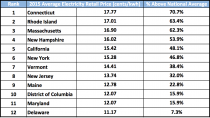
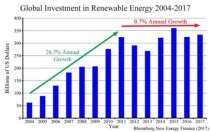
But because of a lack of infrastructure, rather than using cheaper and cleaner domestic fuel from neighboring states, New Englanders are forced to pay more to burn fuel oil and import higher-priced natural gas from overseas to meet their energy needs. Neither of these scenarios makes economic or environmental sense.
New England needs modern infrastructure to compete. Energy infrastructure is no exception. We applaud the current administration’s focus on revamping our nation’s infrastructure, and hope New England is included. It’s time for state and local lawmakers to face reality and put consumers over extreme special interests to ensure affordable, reliable energy for all of their residents.
Karen Harbert is the president and CEO of the U.S. Chamber of Commerce’s Global Energy Institute.
WHERE’S THE BEEF?